
Complex Management training in NeuchâtelA demanding read: on the ground in Neuchâtel: what complex management truly reveals about organisations

Available studies converge on some points and diverge on others. A careful reading invites us to define the managerial problem more precisely rather than search for a recipe. When you work long enough on complex management inside organisations in Neuchâtel in the canton of Neuchâtel, you start seeing beyond the official topic. A training request becomes a revealer — sometimes cruel, often useful — of what the organisation doesn't know (or doesn't want) to say about itself.
What the first interviews reveal
In the first five interviews you already sense an organisation's real maturity. Answers converge? Team is aligned. Answers diverge radically? There's a governance topic nobody has yet dared put on the table. The involvement of the direct manager is regularly identified as a favourable condition, without being a guarantee of results on its own.
The silence of middle managers
The most telling signal isn't what you hear, but what you don't. When middle managers say little about complex management, it's because they haven't received the mandate — nor the implicit permission — to speak. Almost always revealing.

The moment the group tips
In any collective dispositif there is a precise moment — often midway through the second session — when the group collectively decides to play the game, or to stay on the surface. The moment can't be forced; it has to be recognised. And it changes everything.
Quiet sabotage behaviours
Every organisation produces its own quiet sabotage mechanisms: systematic delays, "I didn't have time to read it", jokes that defuse. Naming them without attacking is 80% of the work. (our executive and employee training programmes)
What feedback workshops say
When you install a team feedback workshop you learn more about real culture in two hours than in three months of surveys. The ability to receive a hard piece of feedback without flinching is the most reliable collective-maturity indicator we know.
The point of honour
Science gives directions, not recipes. The rest — dosage, timing, courage — remains a craft. It is the one we practise.
Sources and research references
Edmondson — Psychological Safety and Learning Behavior in Work Teams · Salas et al. — The Science of Training and Development in Organizations To go further: explore the Complex Management training in Neuchâtel in the canton of Neuchâtel, or browse our executive and employee training programmes in Switzerland.
In pictures: Complex Management in Neuchâtel
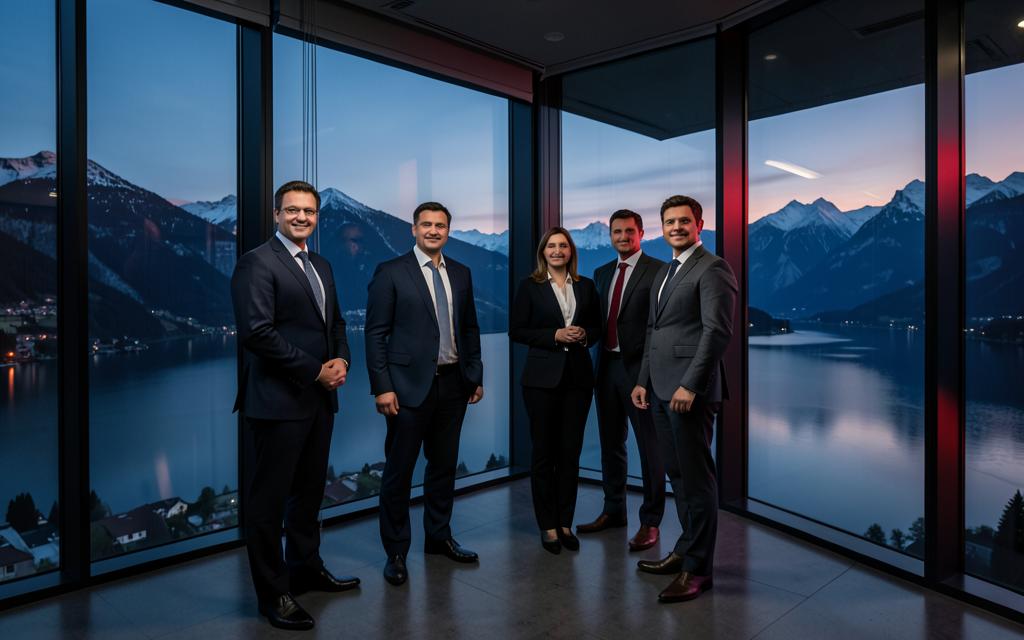


- complex management
- Neuchâtel
- field
- training neuchâtel