
Public Speaking & Impact training in Lucerne« Speaking up at assemblies »: why leaders of family SMEs stay silent
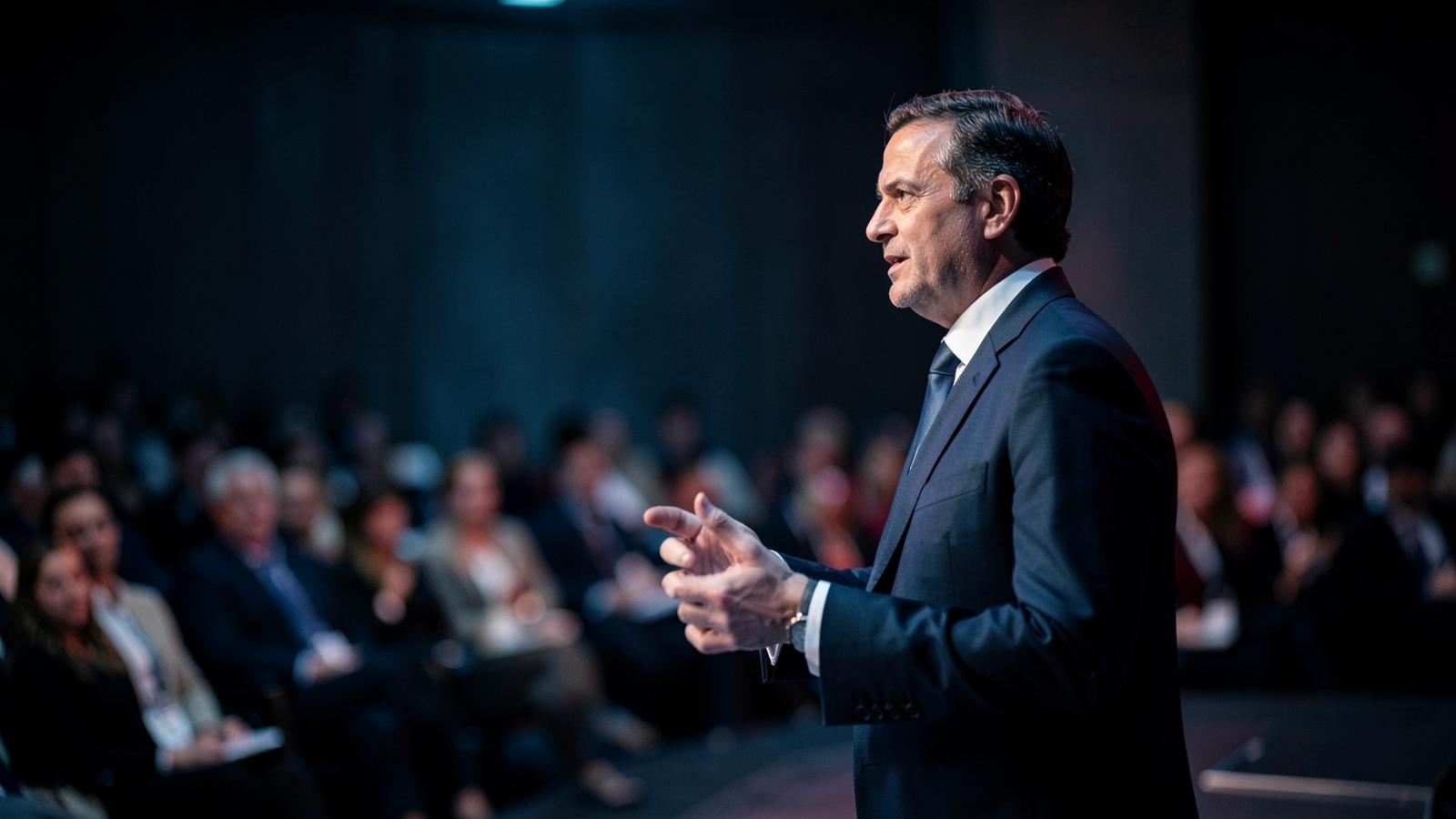
Regional SMEs are rich in expertise, yet their leaders speak little at professional meetings, industry congresses or local forums. Why do those who decide daily freeze in front of an assembly?
What social psychology establishes
Michael F. Scheier and colleagues (1994, Journal of Personality and Social Psychology) showed that reluctance to speak depends less on real competence than on belief in a threatening evaluation. A competent person may stay silent if they anticipate judgment. This intensifies in formal contexts where the audience's status is perceived as superior or equal — exactly what a leader feels facing peers or external experts.
The mechanism: anticipation and cognitive load
Itzhak Fried and collaborators (2010, Current Biology) documented how the brain activates the same circuits when observing an action as when performing it. A leader imagining a critical audience 'relives' the criticism mentally, before even speaking. This pre-verbal mental simulation absorbs attentional resources normally devoted to clear formulation. The result: a less fluent intervention, less persuasive, which retrospectively reinforces the belief that 'I should not speak'.

The limitation: a question of context, not personality
It would be too simple to read this as shyness. Many of these leaders express themselves easily in their office or in small groups. Research shows that it is not speaking itself that is the issue, but an environment perceived as evaluative. This means that laboratory data, where stakes are reduced, do not capture the real intensity of the phenomenon in professional environments where reputation matters. (our executive and employee training programmes)
What this changes for training
One does not format 'courage' generically. An effective intervention begins by recognizing that silence is not a lack of competence, but a protective anticipation of perceived risk. From there, learning focuses on three points: clarifying the real stakes (what do I truly risk?), building a discourse structure that reduces live cognitive load, and gaining repeated experiences in environments where negative evaluation is explicitly impossible.
A practical check in Lucerne
For a leader of an industrial, hospitality or regional financial services SME, the starting point is observable: list, over three months, each situation (interprofessional meeting, important client call, presentation to local authorities) where she or he did not speak, although there was something to say. Note, for each one, a sentence: 'I did not speak because I imagined that…'. This inventory reveals whether the obstacle is genuine missing competence (content) or anticipated judgment (context). 'Public Speaking & impact' training begins from this diagnosis to calibrate support: either strengthen content clarity or build emotional stability anchoring facing group evaluation. This is the nuance regional leaders often overlook: you do not learn to 'be brave', but to identify exactly what holds you back, and only then act on it. To go further: explore the Public Speaking & Impact training in Lucerne in the canton of Lucerne, or browse our executive and employee training programmes in Switzerland.
In pictures: Public Speaking & Impact in Lucerne


- public speaking & impact
- Lucerne
- research
- training lucerne