
Influence Management training in Lausanne · canton of VaudManaging through influence in the canton of Vaud: how can you resolve expert disagreements without line authority?

The canton of Vaud brings together higher education institutions such as EPFL and UNIL, medtech businesses, food industry headquarters on the Riviera and a dense network of SMEs, alongside international sport and the Lake Geneva region’s scale-ups. In this environment, how can a project lead move a cross-functional disagreement forward without having line authority over the experts involved?
What the literature establishes about influence tactics
Gary Yukl and J. Bruce Tracey (1992, Journal of Applied Psychology) examine relationships between different influence tactics, commitment to a request and perceived managerial effectiveness. Rational persuasion and consultation are among the tactics associated with the most favourable outcomes, unlike pressure. These observations support making a reasoned case and involving others in developing a solution, without establishing that any tactic will succeed in every situation.
A complementary mechanism: being able to raise an objection
Amy Edmondson (1999, Administrative Science Quarterly) identifies an association between team psychological safety and learning behaviour. Psychological safety is a shared belief that a team is safe for interpersonal risk-taking, including raising a problem or asking for help. For decisions involving different experts, this suggests allowing technical objections to be voiced without immediately treating them as a failure to cooperate.

The premature conclusion: consultation alone will settle the issue
More consultation does not remove conflicting interests or incompatible constraints. In a hypothetical Lausanne medtech project involving a team originating from a higher education institution, a validation requirement could conflict with a scale-up’s commercial timetable. Influence would then mean distinguishing non-negotiable constraints from preferences open to trade-offs, rather than seeking a compromise on every requirement. (our executive and employee training programmes)
The limits of the evidence and of common practice
These studies do not specifically concern the canton of Vaud, and their associations do not establish causal effects applicable to every cross-functional project. A disagreement within an international sports organisation in Lausanne might, for example, depend on institutional mandates that better dialogue alone cannot change. A rigorous approach to influence should therefore clarify who advises, who decides and which questions require escalation.
A practical check in Lausanne
For a cross-functional project in Lausanne, a suggested exercise within the « Manager par influence » programme is to record each option, its evaluation criterion, the objections and the decision authority before the decision is made. Afterwards, a participant from another function checks whether each objection has received a documented response: incorporation, reasoned rejection or escalation. The measure is the proportion of objections with a traceable response, not the number of favourable opinions. Comparing this record across several decisions makes the handling of disagreements auditable, without claiming that this alone measures decision quality. To go further: explore the Influence Management training in Lausanne in the canton of Vaud, or browse our executive and employee training programmes in Switzerland.
In pictures: Influence Management in Lausanne
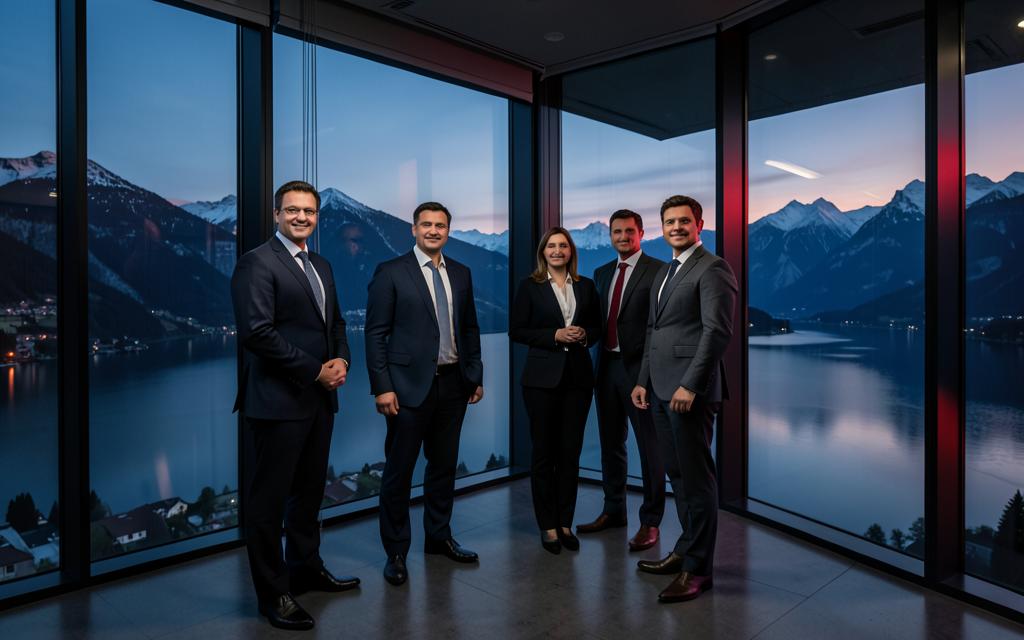

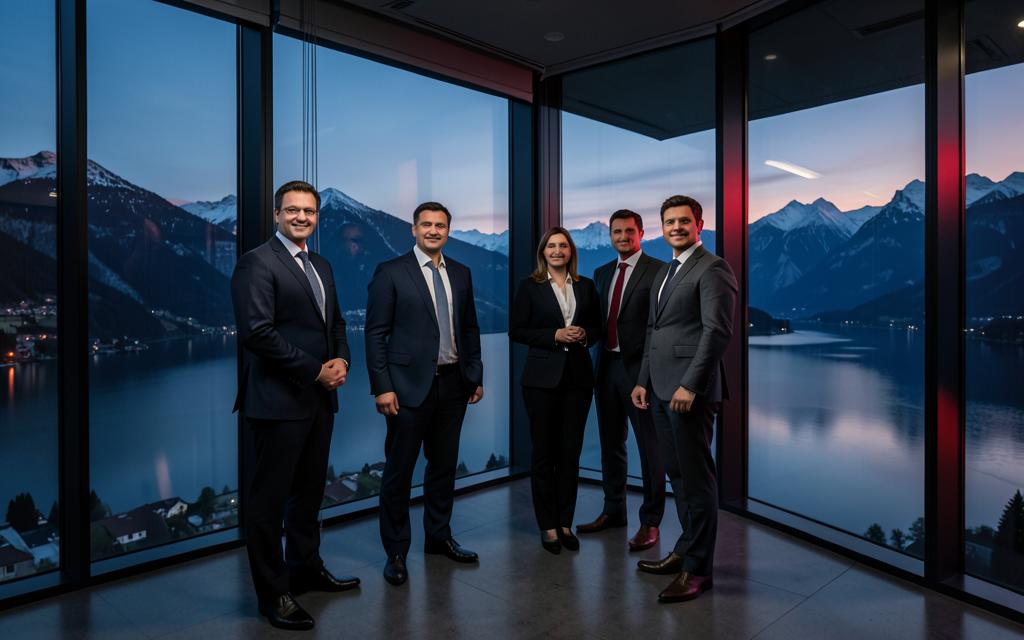
- influence management
- Lausanne
- research
- training lausanne