
Complex Management training in LucerneComplex management in the canton of Lucerne: when should an ongoing project be stopped?

In the canton of Lucerne, tourism, hospitality, regional financial services and industrial SMEs form a business environment where many family-owned firms benefit from short decision-making channels and strong local ties. For SHR's “Management complexe” programme, this raises a question worth practising: how can managers reassess a disappointing project when its future also involves the reputation of the person who launched it?
1. What the literature establishes
Barry M. Staw (1976, Organizational Behavior and Human Performance) shows experimentally that responsibility for an initial decision can encourage further commitment after negative results. Continuing a project therefore depends on more than its prospects: it can also serve to justify an earlier choice. This finding identifies a decision-making risk without implying that all persistence is irrational.
2. The sunk-cost mechanism
Hal R. Arkes and Catherine Blumer (1985, Organizational Behavior and Human Decision Processes) document the tendency to continue an activity after investing money, time or effort in it. Their analysis highlights, among other factors, the desire not to appear wasteful of resources already committed. Yet an irrecoverable expense does not become recoverable because further spending is authorised: the decision should compare the future consequences of the options still available.

3. The premature conclusion: stop as soon as results disappoint
Concluding that every struggling project should be abandoned would be another mistake. Exit costs, contractual commitments or benefits that remain plausible may justify continuation, provided they are made explicit and reassessed. In a family business, maintaining a local relationship may also have genuine future value; it should not, however, become an argument that cannot be questioned. (our executive and employee training programmes)
4. The limits of the evidence and of project reviews
These studies draw in part on experimental situations and do not directly measure decisions in Lucerne businesses. They establish neither a universal stopping threshold nor a basis for judging a particular decision without examining its constraints. A project review is itself vulnerable if the person who initiated the project alone selects the information and retrospectively defines what will count as success.
5. A practical check in Lucerne
Consider a hypothetical example in Lucerne: a family-owned hotel must decide whether to continue implementing a booking tool that is disrupting service. An exercise proposed for exploring this question within “Management complexe” is to record, before the next decision, irrecoverable expenditure separately from future costs, the options of continuing, scaling back and stopping, and an observable review criterion, such as booking errors recorded in the incident log. Someone who was not responsible for the initial choice reviews this document; on the agreed date, the team checks the criterion against the incidents actually recorded and documents its reasons for the decision. The check concerns whether a criterion was set in advance and genuinely used, not a promise of profitability. To go further: explore the Complex Management training in Lucerne in the canton of Lucerne, or browse our executive and employee training programmes in Switzerland.
In pictures: Complex Management in Lucerne
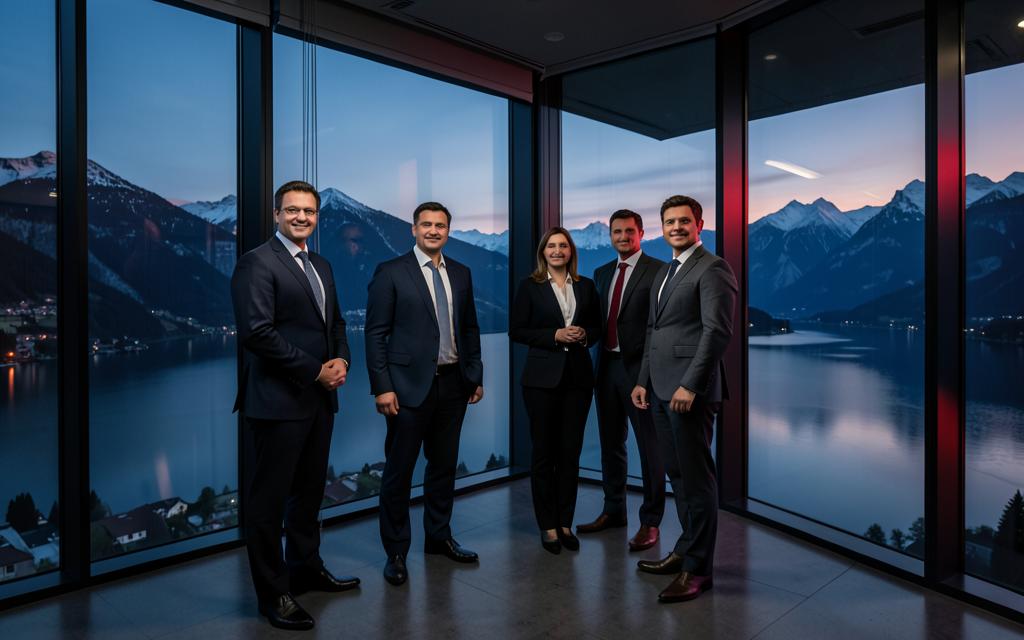


- complex management
- Lucerne
- research
- training lucerne