
Influence Management training in Lugano · canton of TessinManaging through influence in Ticino: how can you ask for help without creating a personal debt?

In Ticino, banking, fashion, trade and Italian-speaking family businesses provide varied settings for cooperation, with links to the Italian market and cross-border exchanges fostered by nearby Lombardy. For SHR’s “Managing through influence” programme, this raises a question worth examining: how can you ask for a contribution without turning past assistance into leverage?
What the literature establishes about reciprocity
Alvin W. Gouldner (1960, American Sociological Review) offers a theoretical account of the norm of reciprocity: receiving help can create a social obligation to give something in return. This norm helps sustain cooperation, but guarantees neither a fair exchange nor the professional relevance of a request. It is a sociological framework, not experimental evidence of managerial effectiveness.
A mechanism distinct from liking
Dennis T. Regan (1971, Journal of Experimental Social Psychology) shows experimentally that a prior favour can increase compliance with a subsequent request, and that this effect cannot be reduced to liking the requester. Someone’s apparent willingness may therefore reflect a felt obligation rather than an interest in the task. For a manager working across functions, the distinction matters: obtaining help does not establish why it was given.

The hasty conclusion: give help to get help
One might conclude that accumulating favours is enough to become influential. This instrumental reading, however, confuses a favourable response to a request with cooperation whose underlying reasons can be discussed openly. A more cautious application is to justify the contribution through the work to be done, without treating past assistance as a debt to collect. (our executive and employee training programmes)
The limits of the evidence and informal arrangements
These studies measure neither business practices in Ticino nor the long-term effects of reciprocity within its professional networks. A bounded experiment cannot predict the consequences of repeated exchanges between colleagues, partners or members of a business-owning family. Close relationships should therefore be treated neither as a local shortcoming nor as a guarantee of cooperation: priorities, workloads and opportunities to decline still need examination.
A practical check in Lugano
In a hypothetical case in Lugano, a manager in a family-owned fashion business asks the sales team serving Lombardy to help prepare a launch, having previously helped them out. An exercise for the “Managing through influence” programme is to draft a request stating the shared benefit, estimated workload and option to suggest a different deadline, without invoking the earlier favour. Over a month, a log can establish the proportion of requests containing all three elements and record, for each counterproposal, whether it was considered without invoking a debt. This measures how help is requested, not the certain absence of perceived pressure. To go further: explore the Influence Management training in Lugano in the canton of Ticino, or browse our executive and employee training programmes in Switzerland.
In pictures: Influence Management in Lugano
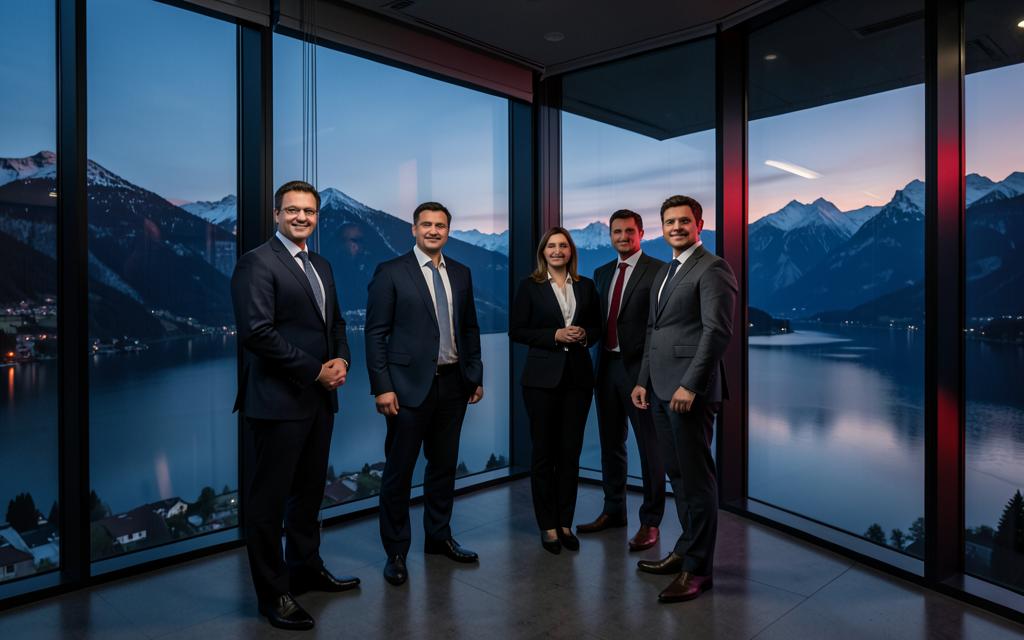

- influence management
- Lugano
- research
- training lugano