
Women in Leadership training in FribourgWomen’s leadership in the canton of Fribourg: how can professional connections bridge French and German?

In the bilingual canton of Fribourg, the agri-food sector, industry and the university hub often work across the Sarine. For SHR’s “Women’s Leadership” programme, this raises a practical question: how can participants develop professional relationships they can draw on beyond their usual language circle?
1. What the literature establishes about professional networks
Herminia Ibarra (1992, Administrative Science Quarterly) shows, in an advertising agency, that women’s and men’s professional networks differ in structure and in the access to resources they provide. The study distinguishes instrumental relationships, which support work, from expressive relationships, associated with friendship and support. It encourages attention to what a relationship actually makes available, rather than simply counting contacts.
2. Language also shapes the formation of trust
Helene Tenzer, Markus Pudelko and Anne-Wil Harzing (2014, Journal of International Business Studies) examine how language barriers influence trust formation in multinational teams. Their qualitative study describes, among other mechanisms, how communication difficulties can alter perceptions of competence and reliability. This mechanism suggests that fluency in a language should not be confused with the ability to become a trusted professional contact.

3. The hasty conclusion: simply do more networking
One might conclude that women should attend more networking events and improve their command of the other language on their own. That would overlook how access to relationships also depends on introductions, interaction formats and the habits of people already embedded in networks. A more cautious implication is to combine individual initiative with conditions for interaction that do not reserve relationship-building for the most linguistically confident participants. (our executive and employee training programmes)
4. What these findings cannot establish
Ibarra’s research concerns one organisation, while the study by Tenzer and her colleagues examines multinational teams rather than Fribourg’s specific bilingual context. These studies therefore establish neither a disadvantage specific to women leaders in the canton nor a combined effect of gender and language in this setting. A longer contact list is also no proof of improved access to advice, information or collaboration.
5. A practical check in Fribourg
One possible exercise within the SHR programme would be for each participant to map the people she can approach for technical advice, sector information or an introduction, noting the usual language of each relationship. Consider a hypothetical situation: an agri-food manager in Fribourg seeks a contact in a German-speaking industrial company or at the university hub; an introduction accompanied by a short bilingual agenda could support an initial conversation. Over one month, she records requests, useful responses and agreed follow-up actions, without assessing people by their accent or fluency. The check is concrete: can she now obtain a relevant answer from an identified contact beyond her original language circle? To go further: explore the Women in Leadership training in Fribourg in the canton of Fribourg, or browse our executive and employee training programmes in Switzerland.
In pictures: Women in Leadership in Fribourg
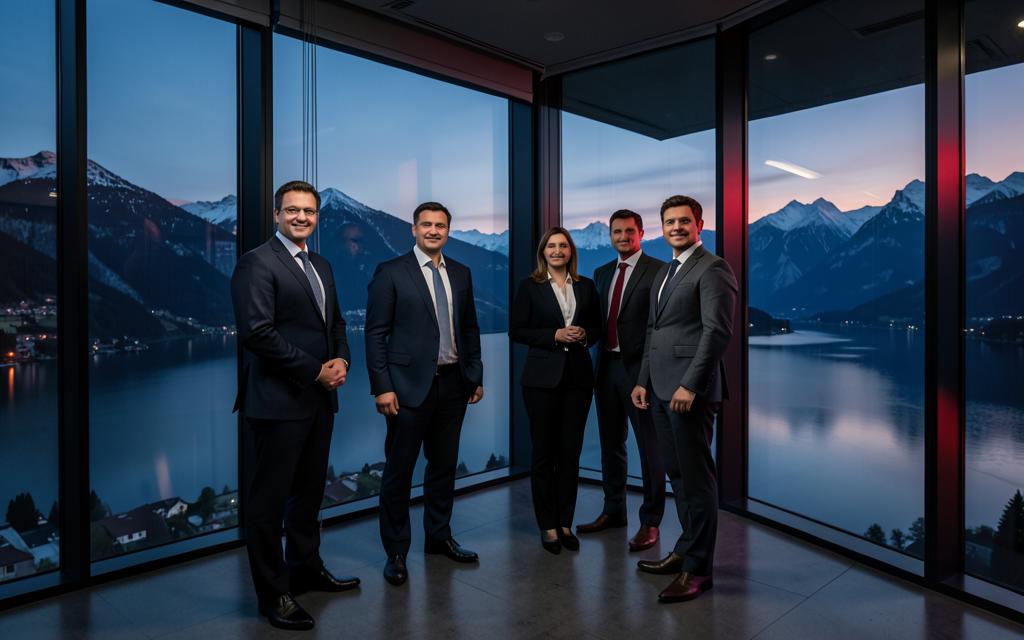

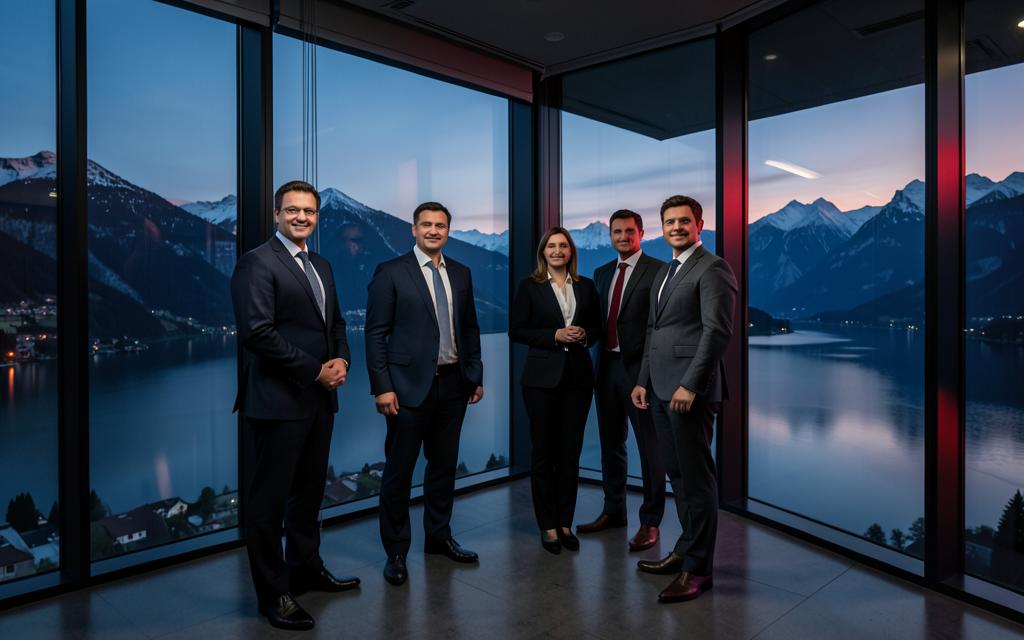
- women in leadership
- Fribourg
- research
- training fribourg