
Complex Management training in LucerneA struggling project: when does persistence become a management mistake?

When several departments have invested time and put their credibility behind a project, continuing can seem more acceptable than reconsidering it. For SHR's “Management complexe” programme, this raises a specific question: how can managers decide on the next step without having to defend every previous one?
1. What the literature establishes: responsibility can strengthen commitment
Barry M. Staw (1976, Organizational Behavior and Human Performance) experimentally examines resource allocation following unfavourable outcomes. In this setting, participants personally responsible for the initial decision commit more additional resources than those who are not responsible for it. This finding shows that continuing does not necessarily reflect a better assessment of prospects: defending a past decision can also play a part.
2. A second mechanism: the weight of sunk costs
Hal R. Arkes and Catherine Blumer (1985, Organizational Behavior and Human Decision Processes) show that earlier investments of money, effort or time can encourage people to continue an activity. The desire not to appear wasteful helps explain this sunk-cost effect. In management, the argument “we have already invested too much to stop” therefore needs to be separated from an assessment of future benefits and costs.

3. The premature conclusion: stopping is always more rational
These studies do not mean that a struggling project should always be abandoned. Past investment may have generated capabilities or assets that genuinely improve its prospects, while stopping may create new costs. The useful distinction is between expenditure that cannot be recovered and consequences that the decision can still change. (our executive and employee training programmes)
4. The limitations: a demonstrated mechanism is not a diagnosis
These experiments do not reproduce the full complexity of contracts, technical dependencies and enduring working relationships. They therefore do not justify labelling every decision to continue a loss-making project irrational. In practice, a written rationale is not enough either: forecasts can be reframed to protect the original choice, making a critical review valuable.
5. A practical check in Lucerne
In Lucerne, tourism, hospitality, regional financial services and industrial SMEs form an economy in which many family-run businesses combine short decision paths with strong regional ties. Consider a hypothetical example: a family-owned hotel continues a software change despite difficulties, after its manager personally backed the original choice. As an exercise linked to the “Management complexe” programme, managers could record expected future costs and benefits, an observable review criterion and a review date before committing further resources, then have someone uninvolved in the initial choice challenge the note. On the agreed date, checking whether the criterion has been met and whether the decision follows the stated rule — or any departure is explicitly justified — creates an auditable record without assuming that the project should stop. To go further: explore the Complex Management training in Lucerne in the canton of Lucerne, or browse our executive and employee training programmes in Switzerland.
In pictures: Complex Management in Lucerne
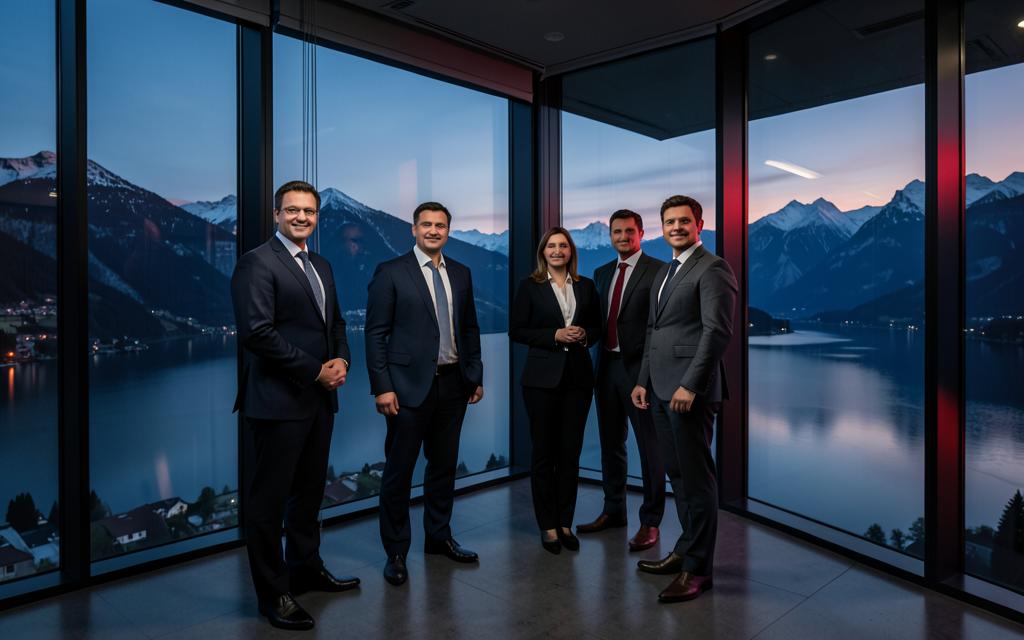


- complex management
- Lucerne
- research
- training lucerne